
Data keeps pointing the same direction: trust isn’t disappearing, it’s shrinking inward. That’s both a warning and a window for organizations in 2026.
The latest Trust Barometer from Edelman finds that seven in ten people are unwilling or hesitant to trust someone with different values, backgrounds, or information sources. Edelman calls it insularity. For communicators, it means your audience is smaller, more self-selected, and harder to reach than it was a year ago.
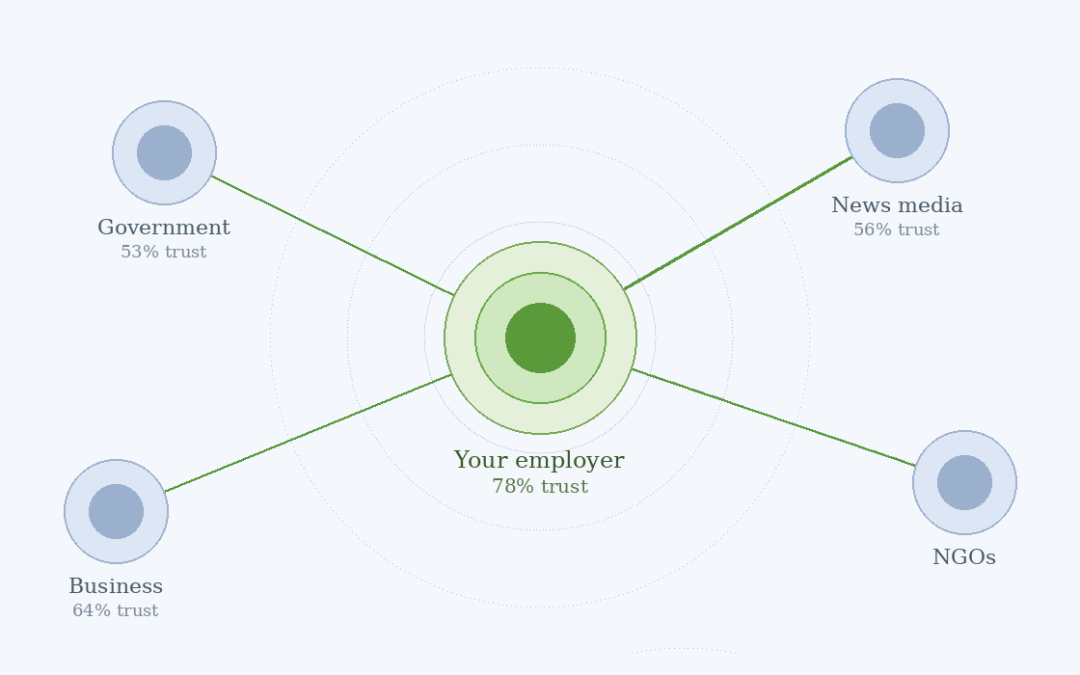
The trust that remains has migrated somewhere specific: the workplace. Employees trust their own employer at 78 percent — 14 points ahead of business generally and 25 points ahead of government. That’s a significant strategic asset most organizations aren’t fully using.
What Reputation Managers Need to Know
Economic anxiety is driving the retreat. Two-thirds of employees worry that trade policies and tariffs will hurt their employer. Among lower-income respondents, 54 percent believe generative AI will leave them behind. Fear and economic pressure are doing the work here, and they’re compounding fast.
The information environment adds to the strain. Just 56 percent of U.S. adults now say they have at least some trust in national news organizations — down 20 points since 2016, according to Pew Research Center. A separate Pew-Knight Initiative survey found that 57 percent of Americans express low confidence in journalists to act in the public’s best interest. When the channels carrying your message are themselves distrusted, reach and result part ways.
How Organizations Can Build Reputation When Trust Is Fragmented
Edelman’s findings recommend that employers promote a shared identity and culture, reminding employees of what unites them — 82 percent of respondents called this effective. Bringing employees into cross-difference interaction ranked at 74 percent; partnering with unexpected organizations to initiate conversations, 68 percent.
Your internal audience is your most credible external signal. Employees who trust their organization become proxies for public trust through word of mouth, social proof, and visibility in their communities. Forty-nine percent of respondents say they’ll trust someone different from them when that person has an open mind and doesn’t try to change them. Thirty-five percent say a business earns trust simply by encouraging people to cooperate on shared solutions without staking out a position.
Lead with shared purpose. Demonstrate competence through action. And consider that CEO credibility now lives closer to home than it once did — nearly seven in ten people believe CEOs should help bridge divides, yet only 31 percent feel they are doing this well.
The gap between expectation and performance is where reputations are built or lost.